
-
-
Kuva: Elias Lundh -
Kuva: Elias Lundh -

Munkängarna, Naturreservat
Luonnonsuojelualue
- Kunta: Västra Götalands län
- 6642.58 km päässä sinusta
Toiminnot
Kuvaus
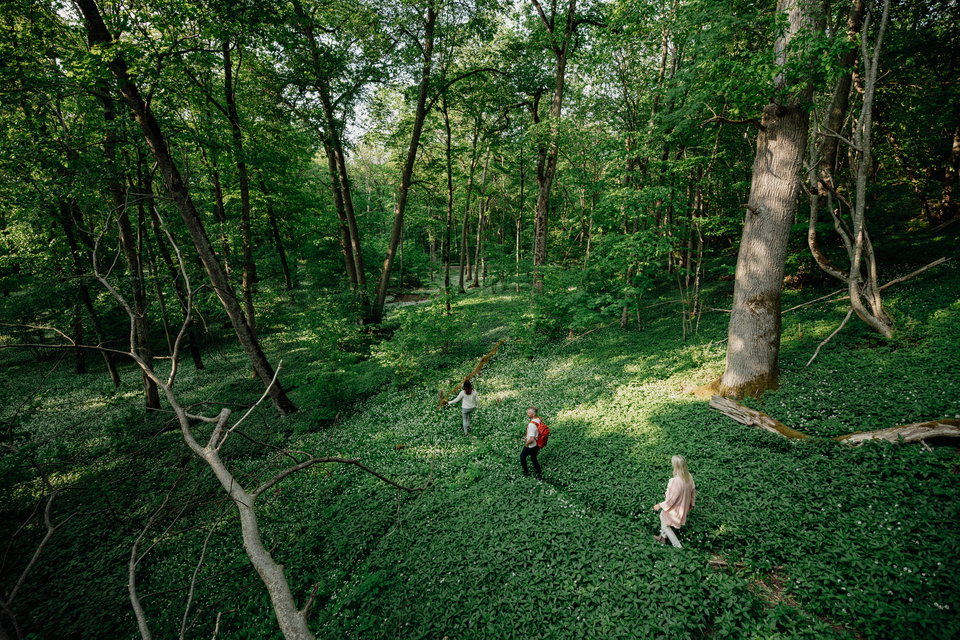
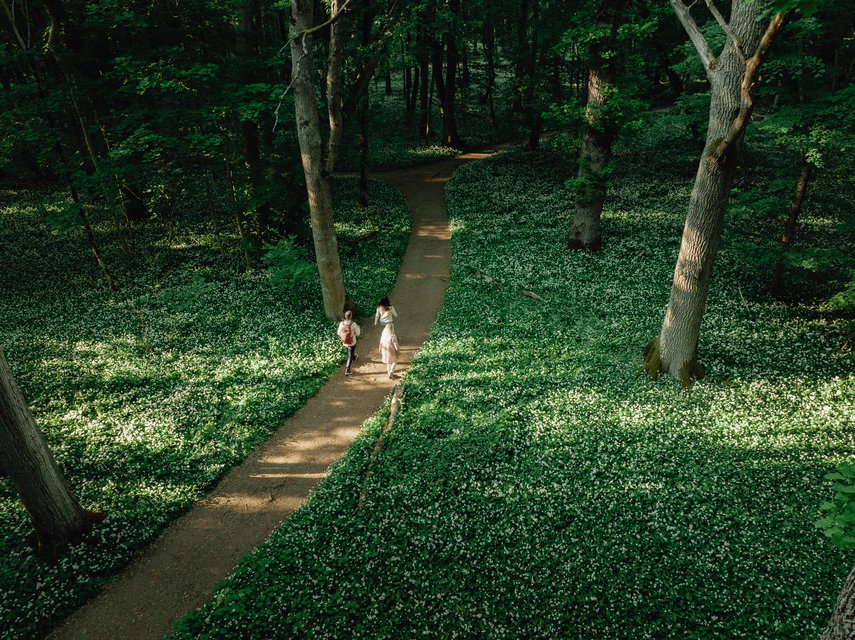
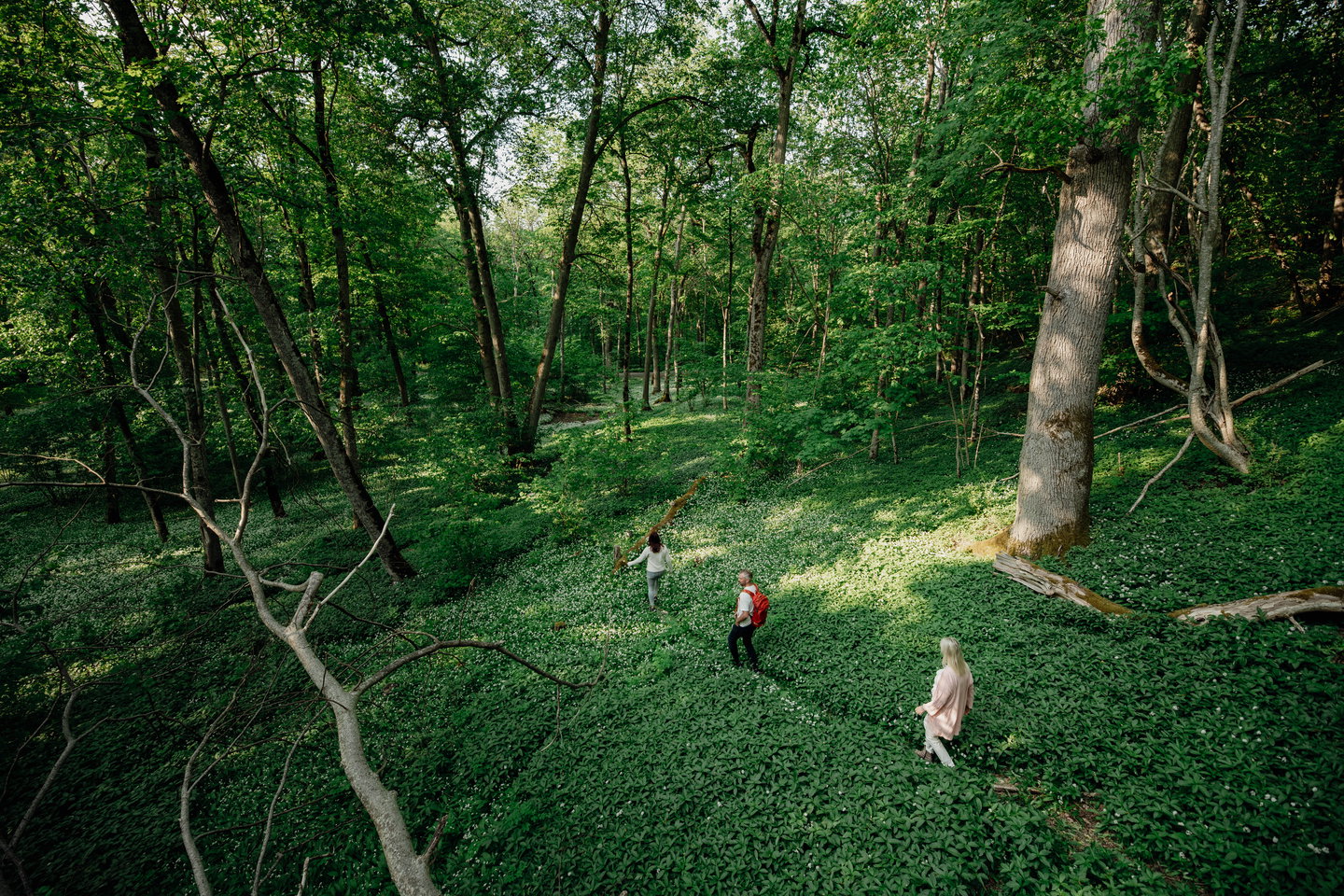
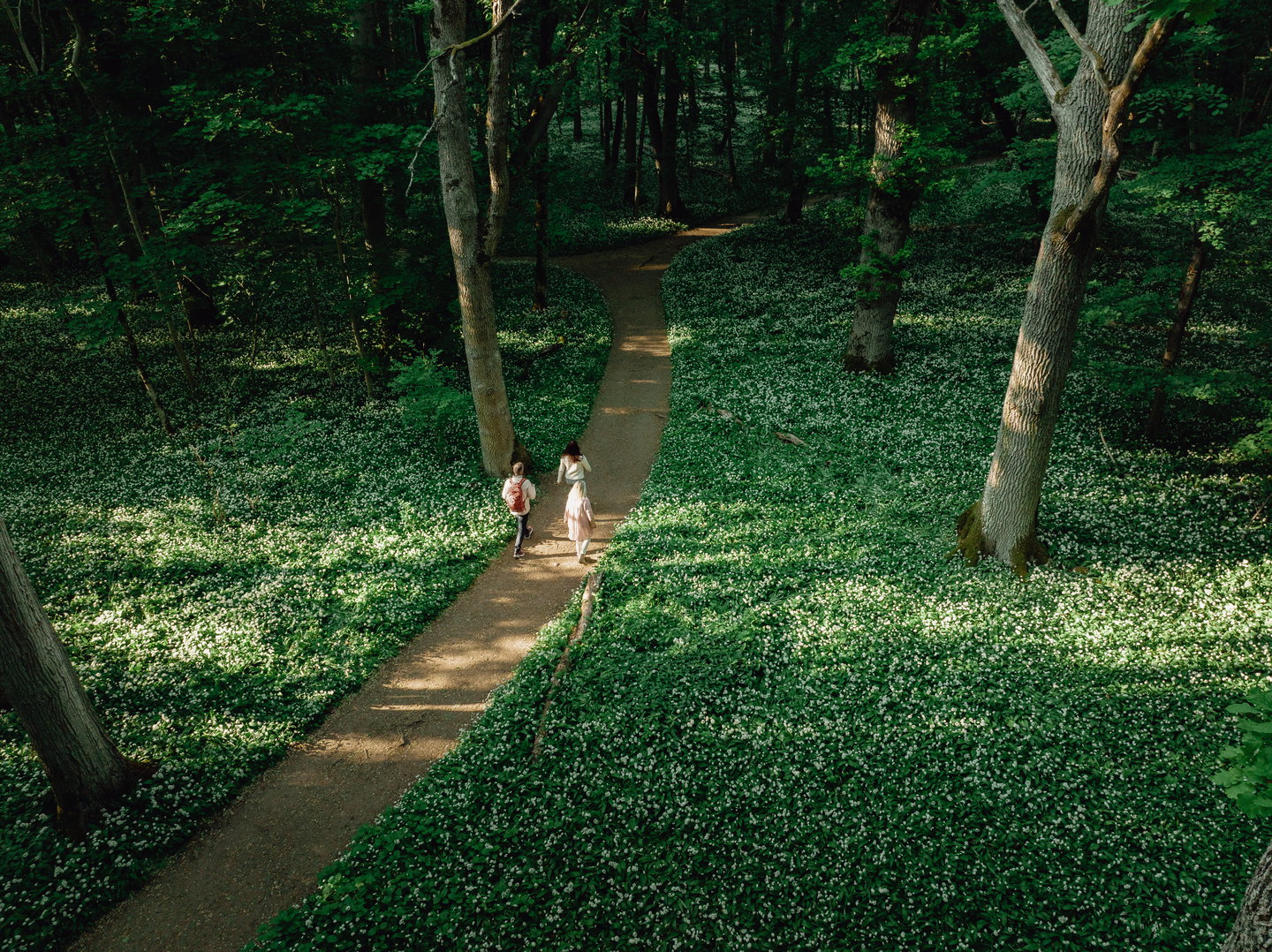
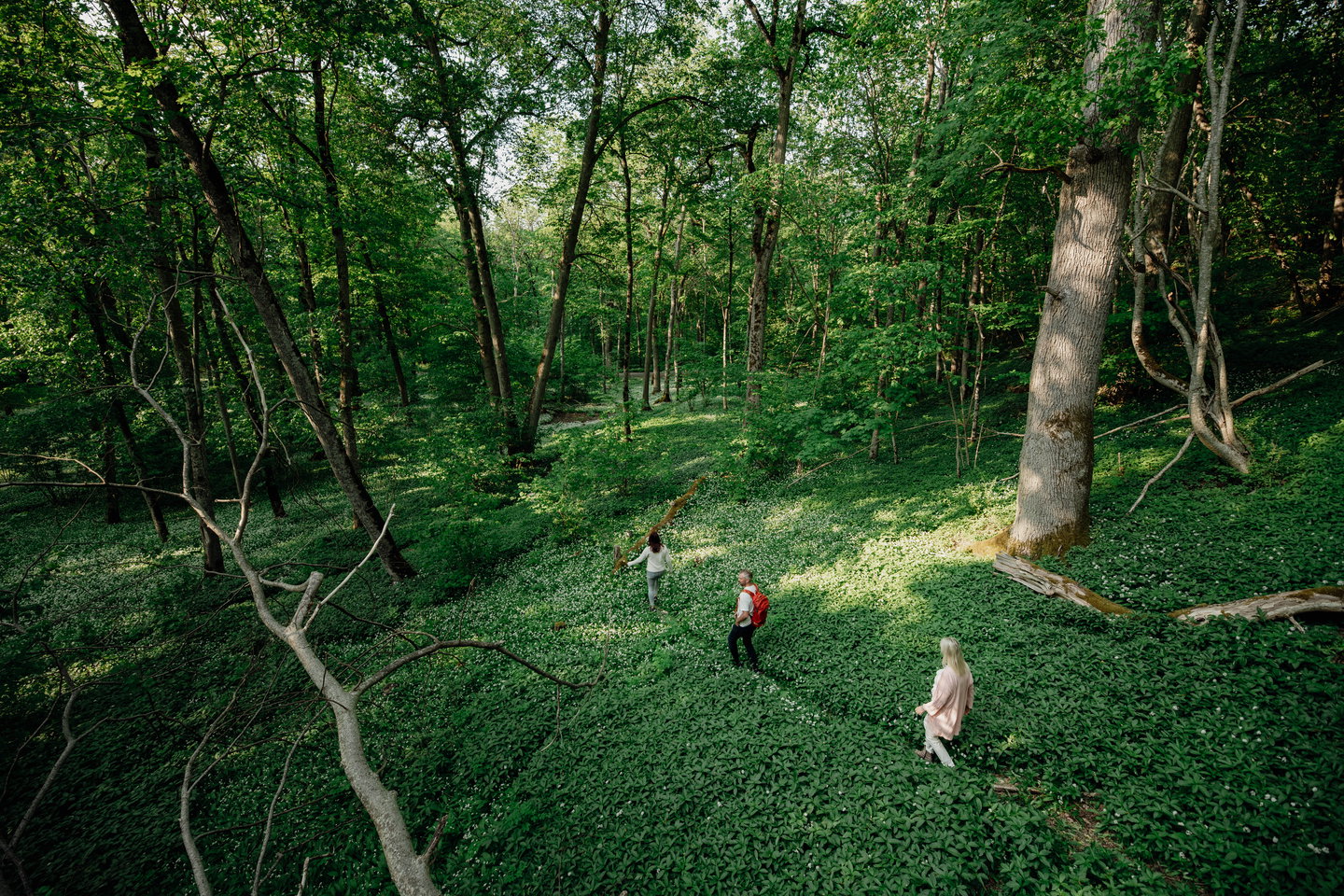
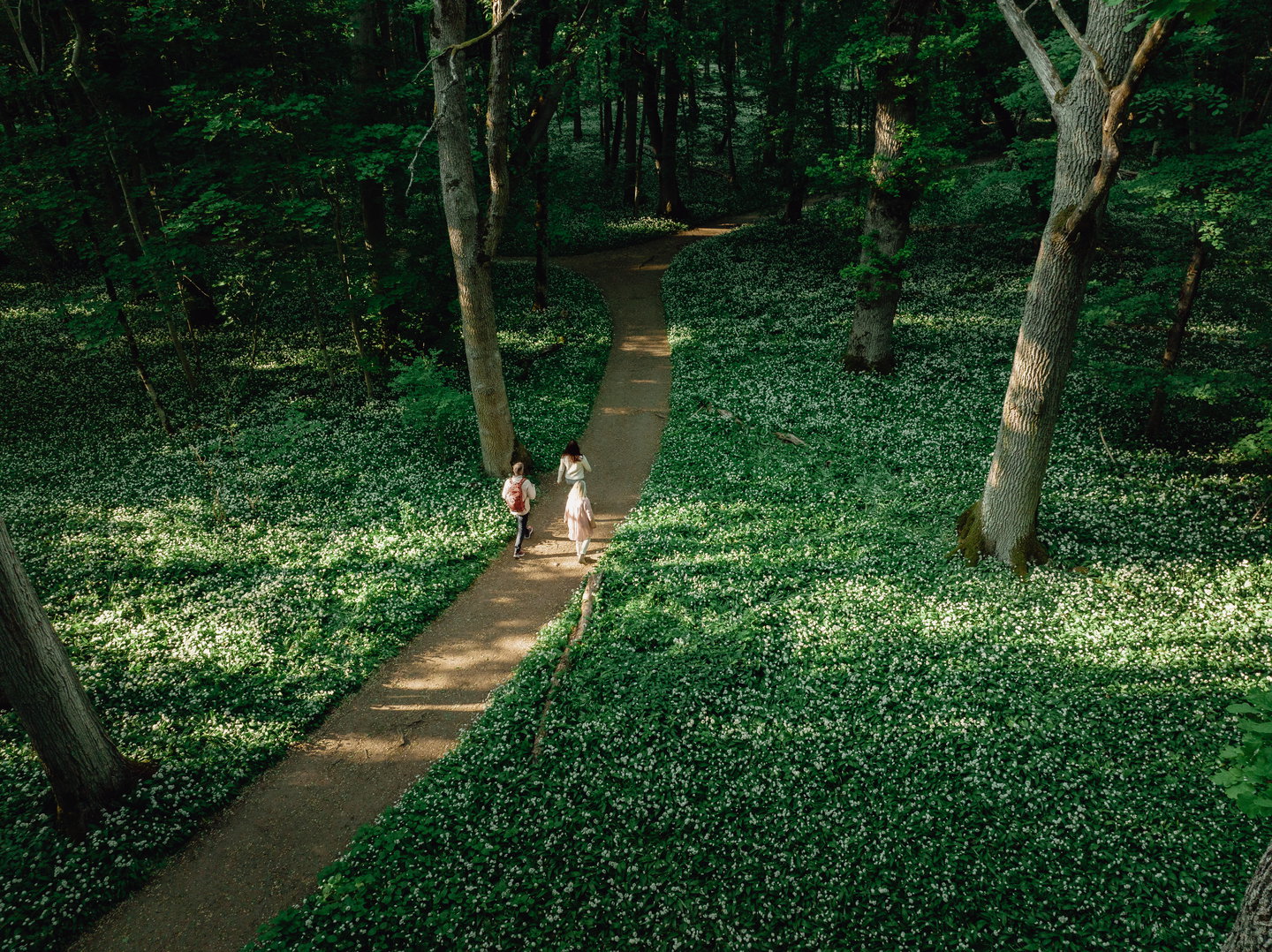
A lush grove of deciduous trees with noble species, this is The Munch meadows, one of the most easily accessible and popular areas on Kinnekulle. In spring, the area offers an impressive display of flowers as the ground becomes covered with wood anemones, yellow anemones, fumewort, and wild garlic. In the slope, set into the rock face, you will also find Mörkeklev Cave.
The geology of Kinnekulle, with its limestone and alum shale, plays an important role in the area’s rich natural environment. Oaks grow here that are important habitats for many species of insects and lichens. If you pause and take a closer look at the old trees, you will notice their wide crowns, a sign that they once grew in a much more open landscape.
Name and Historical Background
The name Munch Meadows, Munkängarna in swedish is likely originates from the period up to the 15th century when Råbäck belonged to Vadstena Abbey. Today, the area is no longer meadows but rather a grove of noble deciduous trees.
A large elevated ledge in the limestone cliff nearby, known as "the pulpit", offers a wonderful view over a rolling green sea of deciduous trees such as ash, elm, beech, oak, linden, and rowan. Both of these sites were formed by the continuous action of Yoldia Sea waves approximately 10,000 years ago. Now, the former seashore at Mörkeklev lies 119 meters above sea level.
In 1923, part of the limestone cliff was protected, and in 1972, the entire Munch Meadows was designated as a nature reserve. The groundwater supply to the meadow has changed, which over time will likely make it drier, altering the vegetation. Munkängarna's flora is very rich due to its base of fertile alum shale. Even during the brightest summer nights, it becomes completely dark under the large trees in Munkängarna, making it nearly impossible to distinguish anything.
The site is well-visited by tourists as well as locals, and it's hard to find a more scenic area. The advantage is that Munch Meadows has its charm not only in summer but also in spring and especially in autumn when all the colors of the rainbow seem to appear in the withering leaves. It's a paradise for nature lovers and photographers.
There is also a legend associated with Munkängarna, "the tale of the Black Madam", who is said to wander here during dark summer nights. How the legend originated is unclear, but it likely has some connection to Råbäck estate, as it's common for castles to have ghosts.
A tourist hotel was established here from 1880 to 1960, serving as a very popular excursion destination. There was also a well visited restaurant at the hotel. However, due to deterioration, it was demolished in 1982. It's unfortunate that restoration wasn't possible, as it would have been beneficial for the local tourism industry.
The park has numerous hiking trails, allowing for long excursions. The Kinnekulle path passes through the area. Emilie Högqvists pavilion is located here. She was a singer who died too early from tuberculosis in Turin. The pavilion was moved here from Stockholm, where she spent a long time and socialized with nobility and royalty.
Nature Reserve
The area has been a nature reserve since the 1970s. The purpose is to preserve a deciduous forest area of grove character, open meadow areas, and an untouched cliff edge. Management today is limited to mowing the open glades annually. Munkängarna is situated on the alum shale layer. The eastern part of the reserve consists of the red stone cliff, a prominent limestone escarpment that extends around the entire mountain. After the last ice age, about 10,000 years ago, the sea reached up to the limestone layer, and the waves carved out stack-like formations in the cliff. This is how Mörkeklev's cave was formed.
Flora and Fauna
The Munch Meadows can be characterized as a grove with noble decidous trees. Almost all swedish decidoud trees are represented here, but elm and ash dominates. In spring, yellow anemones, corydalis, and wood violets bloom. In early summer, the garlic-scented wild garlic forms a dense carpets, and in late summer, wood spurge dominates. The vegetation is not species rich but very lush. In the glades, there are meadow plants. The area has a very interesting fungus flora. The dead trees in the area provide habitats for many mosses, fungi, lichens, and insects that are now threatened. The noble deciduous forest is a species rich environment for both birds and insects.
Please note that picking wild garlic in the Munch meadows is not allowed!
Toimintaa ja tilat
-
Luonnonsuojelualue
Faktat
Facts
Founded: 2007
Area: approximately 76 hectares
Nature conservation manager: County Administrative Board of Västra Götaland.
Municipality: Götene
The munch meadows is part of the EU's network of protected areas, Natura 2000, and was established with part-financing from the EU LIFE-Nature fund.
Reittiohjeet
Munkängarna is located on the northwestern part of Kinnekulle.
On foot:
You can get to Munkängarna by following the Kinnekulle trail that passes through the nature reserve.
Kinnekulle hiking trail, West Sweden website
Public transportation:
Take the Kinnekulle train (Västtrafik) and get off at Råbäck station. From there you can walk to Munkängarna.
Car:
There are two parking lots next to the reserve. You reach these by following the road signs from the highway between Hällekis community and Västerplana (Lidköping). You may only park within the parking lots. If the parking lots closest to the reserve are full, there is also a large parking lot at Hällekis säteri, which is a few hundred meters away.
Directions to the parking lots closest to Munkängarna can be found via Google Maps:
Asetukset
For visitors to the area
You are welcome to visit the Munch meadows nature reserve, but please note that it is forbidden to:
- drive a motorized vehicle other than on a road
- park other than in a specially designated place
- cycle other than on the Kinnekulle hiking trail and on landscaped roads. It is forbidden to organize cycling competitions other than on landscaped roads
- riding other than on marked bridleways and on landscaped roads
- bring an unleashed dog
- make fires
- break branches, fell or otherwise damage living or dead, standing or fallen trees and bushes
- pick or dig up grasses, herbs, mosses, lichens or fungi. However, picking berries and edible mushrooms is allowed
- trapping or collecting invertebrates
- planting animal or plant species
- breaking, crushing or removing stones, minerals or fossils from the reserve
- put up a painting, poster, billboard, sign or inscription
- organize sports competitions or other events for more than 200 people
- organize organized horseback riding other than on landscaped roads.
We also remind you that it is forbidden to pick wild garlic within the nature reserve!
Ota yhteyttä
Sähköpostiosoite
Huomaa, että osa näistä teksteistä on käännetty automaattisesti.
Kysymykset & vastaukset (Q&A)
Esitä kysymys muille Naturkartan-käyttäjille.